Developer Experience
AI-Assisted Development at Scale for a Mining Company
A developer portal, a containerized environment and self-service infrastructure, enabling whole teams to ship code with AI.
BEREFERENCE
Overview
A mining company wanted to use artificial intelligence for development at scale, well beyond its engineering team.
The organization had a large number of people who understood the business deeply and knew how to operate AI tools, but had no development background. What was missing was not the ability to write code — AI covered that — but a safe path between generated code and production.
The project built the developer experience platform that made that path possible: a developer portal over standardized infrastructure, a containerized environment, internal distribution of skills and packages, and an AI review pipeline ahead of every merge.
Challenge
Adopting AI for development at scale ran into problems no single tool could solve:
- Everyone assembled their own environment, and what worked on one machine failed on another. Resolving dependencies cost a full day per person.
- Without standardized dependencies, AI-generated code ran against unpredictable versions.
- There was no safe way to distribute internally the prompts, skills and packages teams were creating.
- Opening code delivery to non-developers required a safety net that did not yet exist.
- Every new project depended on a platform team to come into existence, creating a queue exactly where autonomy was the goal.
- Reviewing everything AI produced by hand would cancel out the speed it delivered.
The risk was never that AI would write poor code. It was code without knowledge of the environment, reviewed at a rate that could not match its volume, reaching production.
Approach
The platform was built along four tracks:
- Portal: a single entry point where each person provisions what they need without filing a ticket.
- Environment: containerized development, identical for everyone, with declared and versioned dependencies.
- Distribution: a secure internal channel for publishing and consuming skills, prompts and packages across teams.
- Validation: validation branches where generated code is exercised before any merge is proposed.
- Review: an AI-assisted code review pipeline, sized for the volume adoption would create.
Architecture
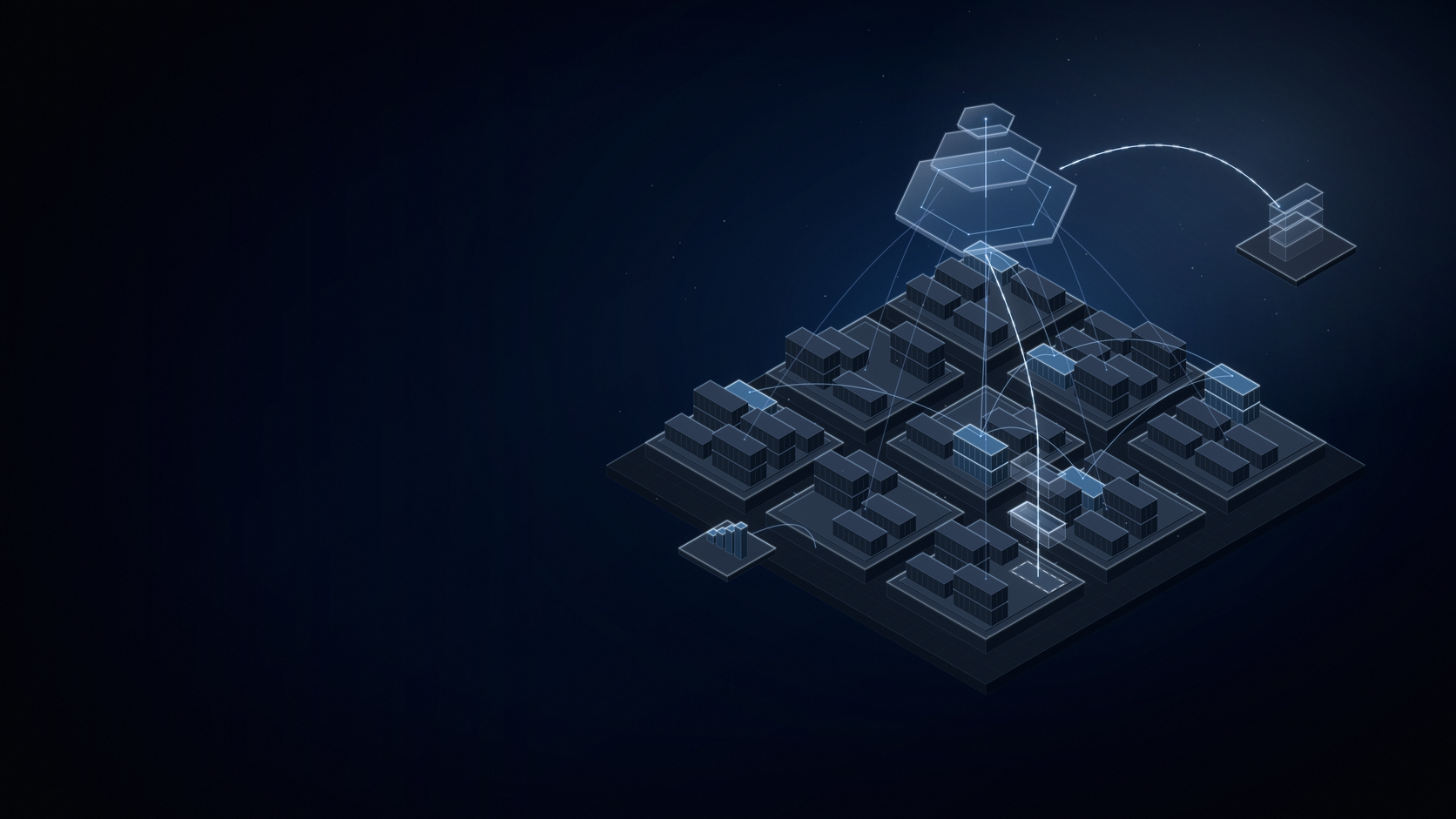
The platform’s infrastructure was standardized into a small set of templates, and the developer portal became the entry point to all of them. Creating a project, provisioning an environment or publishing a package stopped requiring a ticket and became self-service, within the standards the portal enforces.
The development environment became a containerized artifact, versioned alongside the code. Anyone starting work receives the same environment as everyone else, with the same versions and the same AI tooling already configured.
The internal distribution channel was built on that foundation: skills, prompts and packages produced by one team become available to the others without leaving the company perimeter and without relying on public registries.
The delivery flow gained validation branches as a mandatory stage. Code produced with AI assistance is exercised there, and only then moves to the review pipeline, where automated analysis runs before it reaches a human reviewer.
Implementation
Implementation started with the standardized infrastructure and the environment, because nothing above them holds without standardization: a development container, declared dependencies, and AI tooling distributed by default.
The developer portal followed immediately, turning those standards into options anyone can trigger on their own — it is what converted standardization into autonomy rather than into one more rule to comply with.
The internal channel for skills and packages came next, turning scattered knowledge — prompts that worked, patterns that proved out — into something reusable and auditable.
Validation branches and the AI code review pipeline came last, once there was enough volume to justify them.
Enablement ran alongside each stage. People without a development background were equipped to ship production code, with the platform ensuring the result passed the same controls as any other delivery.
Technology
- Claude
- OpenAI Codex
- Developer portal
- Development containers
- Standardized platform infrastructure
- Dependency standardization and versioning
- Internal package and skill registry
- Validation branches
- GitHub Actions and Bitbucket Pipelines
Impact
The gain was not making existing developers produce more. It was increasing the number of people able to deliver software.
More than a hundred people now ship through the platform, and seventy per cent of them are not developers. They are people who know the mining operation intimately and began building their own solutions, without queuing behind a central technology team. Business knowledge and the ability to implement stopped living in different people.
Standardization made that growth sustainable: because the environment is identical for everyone and review is automated, admitting more people to the delivery flow multiplied neither maintenance effort nor risk. Accepted PRs per month rose 40% with no proportional increase in review effort.
Results
1 day → instantResolving environment dependencies
-
More than 100 people shipping code through the platform, 70% of them not developers.
-
A developer portal in operation, with self-service provisioning over standardized infrastructure, replacing the queue at the platform team.
-
Dependency resolution from a day to instant, with the environment containerized and versioned alongside the code.
-
40% more PRs accepted per month, with no proportional increase in review effort.
-
Claude and OpenAI Codex in productive use, distributed by default in the environment rather than configured case by case.
-
Secure internal distribution of skills and packages, keeping what teams produced inside the company perimeter.
-
AI code review on GitHub Actions and Bitbucket Pipelines, preceded by validation branches that exercise the code before a merge is proposed.